Liquid Death, a canned water company, was founded in 2017 by a 41 year-old Dad who decided that if beer can trade on personality, then so can water. Today, the brand does $700 million in sales each year and is valued at a cool $1.4 billion. Sure, this valuation may not be all that impressive if you're comparing it to the crazy FDV's we see in early-stage tech, but for a CPG brand in a commoditized category? So how did they do it? With the power of personality, and you can too.
Clarity and Consistency: The Bedrock of a Memorable Brand
Have you ever heard a brand strategist go on about the importance of consistency and wondered why it matters so much? It's because having a solid grasp on who you are (and are not), and consistently showing up as the most recognizable and appealing version of yourself, is non-negotiable if you want to inspire loyalty and commitment. This is true for humans and it is true for brands, and Liquid Death is certainly a prime example of what this looks like when you lean all the way in.
To understand why, we need to first pay homage to our lizard brain. Seated atop the brain stem, the reptilian brain is the oldest part of our brains and is responsible for your most basic survival instincts. It's the part that processes information before your logical brain gets to see it. You might think of it as the bouncer to your party, and anytime we encounter something new, it asks some very simple questions: "Should I eat it? Fight it? Run away?" or worst still for any brand, "ignore it?" Vigilant and protective though it may be, the lizard brain is also quite lazy, and so, once it's seen the same thing a few times, the lizard brain whitelists it so it doesn't have to stand in line anymore.
This is the reason you trust the bus driver you see each day on your regular commute, or the barista who makes your coffee each morning... because they're always there and they always look, talk and act mostly the same. And as long they don't do anything to hurt you the first few times, your lizard brain tags them as safe. Importantly, it's not that we have to be consistently nice, although that helps, but rather that we have to be consistently authentic.
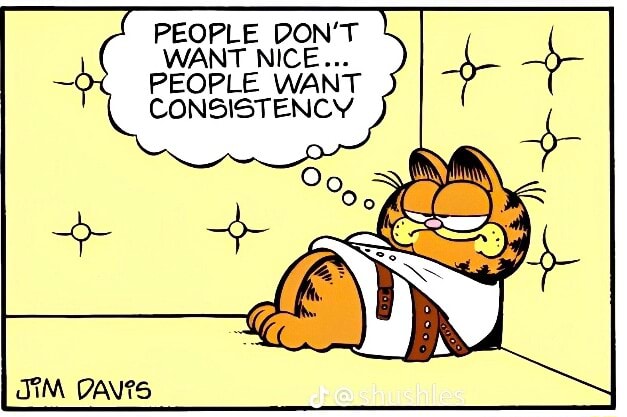
But even Garfield knows that it's hard to be consistent if you don't have a reference point, and this is where brand archetypes come in.
The good news: 1. this problem isn't new; 2. we have tools to speed this up; 3. It's easy to learn.
What's in a Brand Archetype?
At the heart of every memorable brand is a story that resonates deeply with its audience. But not just any story. An archetypal story. One that can tap into the shared human experience across diverse cultures and demographics and trigger a familiar emotion.
Originating from Carl Jung's theory, archetypes represent universally understood symbols, themes, and characters that recur across cultures and throughout time. For brands, these archetypes become a compass that points the way to who you should be and how you should show up.
It's important to note that a single archetype rarely fully describes a brand. Instead, we talk about an archetypal mix. Just like a person, your brand is a blend of characteristics, with one or two archetypes taking the lead. Identifying this mix gives you a head start to developing a story that speaks to a deep and familiar place in your audience.
Why You Should Care
If you're building something that has the potential to put a proverbial dent in the universe, the question isn't whether you have the technical chops to innovate. It's whether you can explain whatever you're doing in a way that inspires loyalty and propels growth. Incorporating brand archetypes into your strategy is a good first step and gives you a fighting chance to:
Create Your Own Category. In an industry where everyone is screaming about the superiority of their product features, having a unique archetypal identity helps you stand out not just for what you can do, but for who you are. This is powerful.
Build Stronger Connections. People don't just buy products; they buy into stories. An archetype-driven story invites your audience to see themselves in your brand. This relatability speaks to their aspirations and breeds attachment.
Inspire Loyalty. Having a clear and compelling brand personality allows your messaging to tap into deeper emotional and psychological traits, fostering a sense of belonging and loyalty among your customers.
Exploring the 12 Brand Archetypes
Jung identified 12 archetypes, each offering a distinct perspective on the world. While your brand might primarily align with one, it's not uncommon to find a blend that truly captures your brand's essence. Here are the 12 archetypes at a glance:
The Caregiver. These guys want you to know they care. Brands like Johnson & Johnson and UNICEF embody the nurturing and protective spirit, prioritizing care and trust above all.
The Ruler. This is all about vertical relationships and hierarchy. Luxury brands such as Rolex and Mercedes-Benz exemplify authority and control, setting standards for excellence and prestige.
The Creator. Creator brands want to help you change the world. Apple and Lego champion innovation and creativity, inspiring others to think differently and push boundaries.
The Innocent. The simple things matter to these brands. Brands like Dove and Coca-Cola evoke simplicity, goodness, and nostalgia, offering a sense of safety and happiness.
The Sage. These brands are thought leaders and have the knowledge to help you succeed. Google and The New York Times stand as beacons of knowledge and truth, guiding their audience with wisdom and insight.
The Explorer. This is all about going places you only dreamed possible. The North Face and Jeep inspire adventure and discovery, encouraging their audience to explore the unknown.
The Outlaw. For the rebel in all of us. Harley-Davidson and Virgin disrupt the status quo, breaking boundaries and challenging conventions.
The Magician. Imagine a future where anything is possible. These brands want to take you there. Disney and Apple (in its product experiences) create wonder and transformation, turning dreams into reality.
The Hero. Nike and the Red Cross empower and inspire, advocating strength and courage to overcome obstacles.
The Lover. Victoria's Secret and Chanel celebrate intimacy and passion, crafting allure and desire in their brand narratives.
The Jester. Old Spice and Ben & Jerry's bring joy and laughter, offering a light-hearted take on their industries.
The Everyman. Levi's and Ikea are relatable and down-to-earth, embodying comfort and reliability.
Brand Archetype vs Personality: Twins or Cousins?
While they might sound similar, you can think of brand archetype and brand personality as two layers of identity. Your archetype is the universal story your brand is telling. It's the blueprint. Your personality is how you tell it. It's the execution, the voice, the texture.
Brand Personality: What Even Is It?
It's not easy to describe a concept as squishy as personality, but thinking of it in terms of how your brand shows up in different contexts helps. Here are four dimensions:
Core Traits. These reflect essence of your brand. It's who you are by default and what you carry with you regardless of circumstance or situation. If your brand archetype is the Sage, for example, one of your core traits might be intelligence.
Interpersonal Traits. These describe how you want team members to interact with customers and partners. A Caregiver brand, for example, might want to ensure team members are always compassionate in customer service.
Company Traits. These dictate how your brand presents itself to the outside world. When people look at your brand assets, attend your events, or read your content, we want them to see you as these things. An Explorer brand might want to be seen as adventurous, for example.
Operational Traits. These have to do with how you get things done. It's how you operate. A Creator brand might be innovative in its problem-solving approaches, whereas a Ruler brand might be very hierarchical, and so on.
How to Define Your Brand Personality
Okay, so to do this properly, you need to commit to the process of doing some deep work with a trusted guide who can help you through each of the following steps. In the absence of that, though, you'll be able to make a decent amount of progress by simply finding the time to take a thoughtful pass on each of these steps:
1. Identify Your Archetype. Start by understanding which archetypes align best with your brand's core values and mission. Use one of the many online references, like this one from Iconic Fox, to map your brand against the archetypes and make a guess at your mix.
2. Determine Core Traits. Reflect on the inherent qualities that define who you are as a brand. These are your non-negotiables.
3. Define Interpersonal Traits. How do you want to interact with your customers? This shapes your communication style, customer service approach, and even the community you build.
4. Articulate Company Traits. Consider how you want the public to perceive your brand. This influences your marketing, branding, and the experiences you create.
5. Outline Operational Traits. Focus on how your brand approaches challenges, innovation, and day-to-day operations. This impacts everything from product development to internal culture.
6. Consolidate and Communicate. Bring these traits together to form a cohesive brand personality. Ensure this personality is consistently communicated across all channels and touchpoints.
How to Use Brand Personality in Your Marketing
Crafting the personality of your brand is akin to the art of selecting the perfect blend of spices for a signature dish. It's what makes your brand uniquely appealing. But having a well-defined personality is only half the battle. Now you need to deploy it.
Firstly, you'll want to pay attention to the tone and voice you adopt, since this will profoundly impact how your message is received. A Jester brand, for example, might use humor and wit in its marketing, while a Sage brand would lean towards insightful and authoritative content.
Secondly, every touchpoint in the customer experience, from your website to your docs to your customer support, should reflect your brand personality. If your brand is the Explorer, even your customer service should feel like it's guiding customers on an adventure.
Memorability is next. Making a lasting impression hinges on cultivating a distinct personality that sets you apart. Whether it's through storytelling, visual branding, or unique customer experiences, a well-defined personality makes your brand stick.
Finally, your brand's personality is a powerful targeting tool. Having a brand personality that resonates with a particular audience, uses their language and meets their needs head-on is a great way to automatically and organically filter your audience so only those you want to hear you listen.
Brand personality is not usually the first thing people think about when considering how best to differentiate, but when done right it can make all the difference.
Wrapping Up
Defining and cultivating your brand's personality isn't just about crafting a unique identity; it's about creating a lasting impression that resonates deeply with your audience. By embracing the principles of consistency, authenticity, and relatability, you can transform your brand into a memorable entity that inspires loyalty, fosters connections, and drives growth.
Whether you align with a specific brand archetype or blend multiple archetypes to form a distinct personality, the key lies in staying true to your core values and mission while effectively communicating your brand's character across all touchpoints. Remember, your brand's personality is the secret ingredient that elevates your brand from being just another option to becoming the preferred choice in the hearts and minds of your customers.